

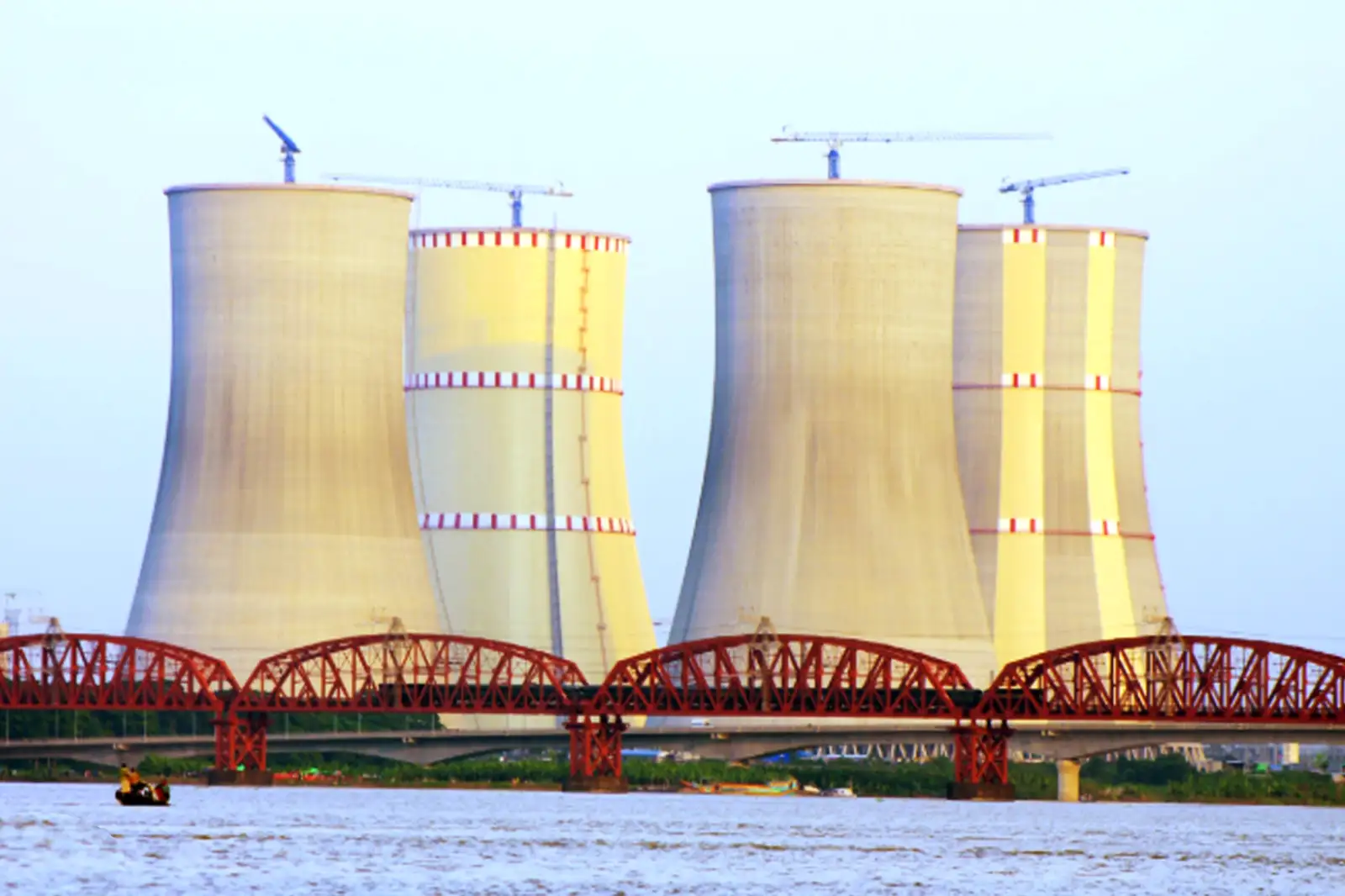
Rooppur Nuclear Power Plant
The Rooppur Nuclear Power Plant is the first nuclear power facility in Bangladesh and one of the most significant energy projects in the country’s history. Located in Rooppur, Ishwardi, in the Pabna district, the project marks Bangladesh’s entry into nuclear energy generation and represents a major step toward long-term energy security and technological advancement.
The plant has been developed to meet the country’s rapidly growing demand for electricity. As Bangladesh’s economy and population continue to expand, ensuring a stable and reliable power supply has become a national priority. Nuclear energy offers a dependable source of large-scale electricity generation with low carbon emissions, making it a strategic choice for sustainable development.
Rooppur Nuclear Power Plant consists of two nuclear reactors, each with a capacity of 1,200 megawatts, giving the plant a total planned capacity of 2,400 megawatts. Once fully operational, it will supply a substantial portion of the country’s base-load electricity, helping reduce dependence on fossil fuels and imported energy sources.
The project is being implemented with technical and financial support from Russia, using modern Generation III+ reactor technology. These reactors are designed with advanced safety systems, including multiple layers of protection and automated shutdown mechanisms. Special emphasis has been placed on safety, security, and environmental protection, in line with international nuclear standards set by global regulatory bodies.
From an engineering and infrastructure perspective, the project is highly complex. It involves not only reactor construction but also the development of supporting facilities such as cooling systems, transmission lines, waste management arrangements, and training centers. Thousands of Bangladeshi engineers, technicians, and workers have been trained as part of the project, contributing to the development of skilled human resources in the nuclear and energy sectors.
The economic impact of the Rooppur Nuclear Power Plant is significant. Reliable electricity supports industrial growth, attracts investment, and improves overall productivity. During construction, the project has generated large-scale employment and boosted local economic activity. In the long term, stable power generation is expected to support national development goals and reduce electricity shortages.
Environmentally, nuclear power produces minimal greenhouse gas emissions during operation, which helps Bangladesh move toward cleaner energy solutions. While nuclear waste management remains a critical responsibility, strict protocols and long-term planning have been incorporated to ensure safe handling and disposal.
In conclusion, the Rooppur Nuclear Power Plant is more than just a power station. It symbolizes Bangladesh’s technological progress, ambition, and commitment to meeting future energy needs responsibly. As the country’s first nuclear facility, it stands as a milestone in the journey toward energy independence and sustainable development.