

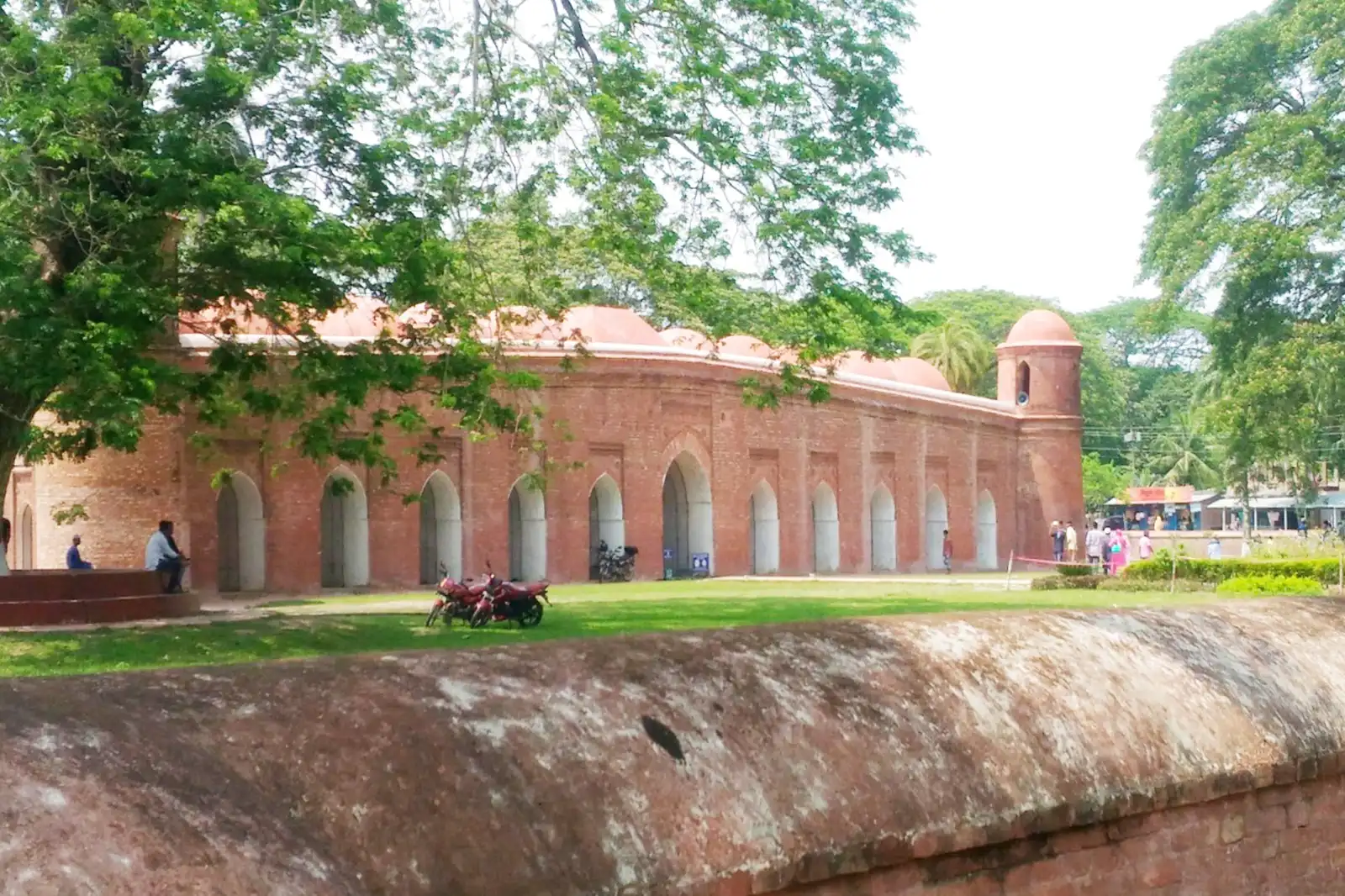
Shat Gombuj Mosque
The Shat Gombuj Mosque, also known as the Sixty Dome Mosque, is one of the most remarkable architectural and historical monuments in Bangladesh. Located in Bagerhat, it stands as a powerful reminder of the country’s rich Islamic heritage and medieval history. Built in the 15th century, the mosque is part of a larger historic mosque city that has been recognized as a UNESCO World Heritage Site.
The mosque was constructed during the reign of Khan Jahan Ali, a prominent ruler, saint, and administrator of the Khalifatabad region. Although commonly called the Sixty Dome Mosque, the structure actually contains seventy-seven low domes arranged in rows, supported by numerous stone pillars. The name is believed to reflect a rounded or symbolic count rather than an exact number.
Architecturally, the mosque is an outstanding example of early Muslim architecture in Bengal. It is built mainly of brick, with thick walls and minimal exterior decoration. Inside, the rows of stone columns divide the prayer hall into aisles, creating a strong sense of symmetry and balance. The domes rest on arches that distribute weight efficiently, showing advanced engineering skills for the time.
The mosque served multiple purposes. In addition to being a place of prayer, it was likely used as a madrasa, a meeting hall, and a court. Its large size suggests that it played a central role in the religious and social life of the region. The building was designed to accommodate a large number of worshippers, reflecting the importance of Islam in the area during that period.
One of the most striking features of the Shat Gombuj Mosque is its simplicity. Unlike later Mughal architecture, it avoids elaborate ornamentation and instead emphasizes strength, proportion, and durability. This simplicity gives the mosque a timeless character and highlights the practical approach of early Bengali Islamic architecture.
Today, the mosque is not only a place of historical interest but also a major tourist attraction. Visitors from Bangladesh and abroad come to admire its architecture and to learn about the legacy of Khan Jahan Ali and the early spread of Islam in Bengal. Preservation efforts have helped protect the structure while maintaining its original character.
In summary, the Shat Gombuj Mosque is more than an ancient building. It is a symbol of faith, leadership, and architectural excellence. Its enduring presence continues to connect modern Bangladesh with its medieval past and stands as a proud testament to the country’s cultural and historical identity.